

Got a box of VHS tapes sitting in a closet, a basement, or your late parents' garage? You're not alone, and you've got more options than "trash it" or "let it rot." Here's the short version, then the full breakdown so you can actually decide.
The best thing to do with old VHS tapes is to digitize any that matter to you before the tape degrades further, then recycle the rest through a proper depot rather than your curbside bin, most municipal recycling programs won't take them. In BC, the Recycling Council of BC's Recyclepedia tool can point you to a depot that accepts magnetic tape. Elsewhere in Canada, check your municipality's electronics or hazardous-waste program. If a tape holds home movies, birthdays, weddings, a voice you haven't heard in years, digitize it first. Everything else can go.
Why You Shouldn't Just Toss VHS Tapes in the Recycling Bin
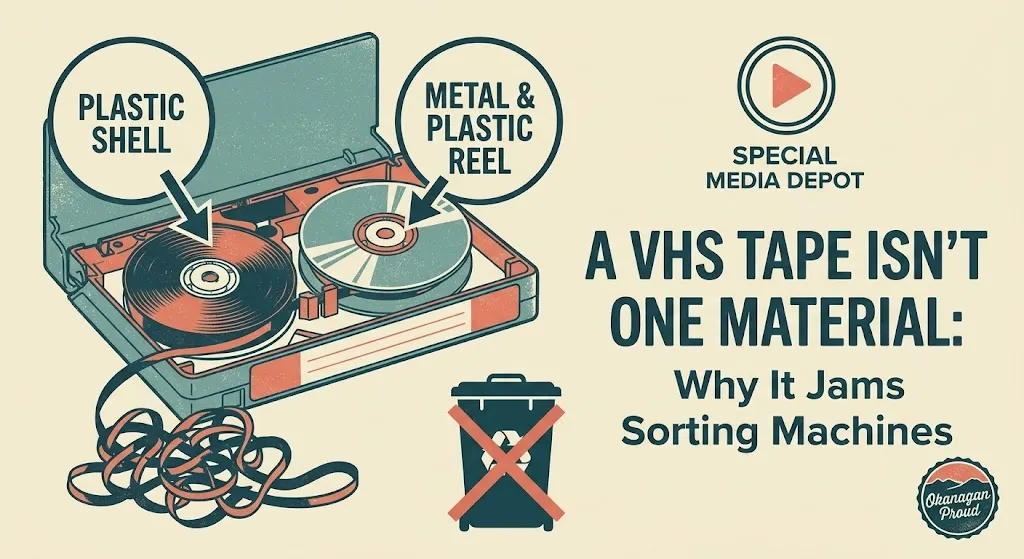
A VHS tape isn't one material, it's a plastic shell, a metal or plastic reel, and several hundred feet of magnetic tape wound around it. That combination is exactly what jams sorting machinery at most municipal recycling facilities, which is why VHS tapes are almost universally rejected from curbside blue-bin programs across Canada, even where the plastic case itself would normally be recyclable. Tossing them in the trash works, technically, but it sends non-biodegradable plastic and tape straight to landfill for no good reason when a proper depot exists.
How Long Do VHS Tapes Actually Last?
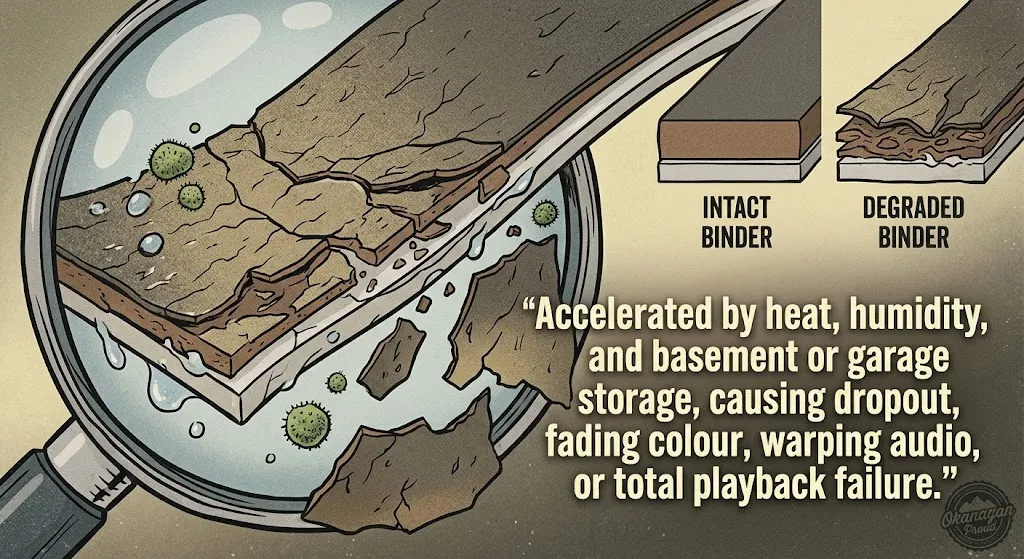
Most VHS tapes start noticeably degrading somewhere between 10 and 25 years after recording, and that clock has already run out on almost everything most people own. The magnetic tape is coated in a binder that breaks down over time, especially with heat, humidity, and basement or garage storage, causing dropout, fading colour, warping audio, or total playback failure. If your tapes are from the 80s or 90s, some of what's on them may already be partially degraded, and every year of storage makes it worse. This is the part most "recycle your VHS tapes" articles skip entirely, the tape itself is the thing with the actual expiry date, not just the plastic shell.
If it's family footage, time matters more than tidiness. A tape that plays fine today might have visible dropout in five years. If you're planning to "get to it eventually," eventually is when the damage happens. Get a free quote to have your tapes evaluated and digitized before that clock runs out.
Your Four Real Options for Old VHS Tapes
Option 1: Digitize the ones that matter (do this first)
Before you recycle or toss anything, sort your tapes into "irreplaceable" and "everything else." Irreplaceable means home movies, family events, anything that only exists on that one tape. Everything else means commercial movies, TV recordings, blank tapes, and anything you could replace or simply don't need. Digitize the first pile. You can always deal with the second pile later, there's no rush on a copy of a movie you can stream tonight.
Option 2: Recycle them properly
Once a tape is digitized (or if it never mattered in the first place), it can be recycled through a depot that actually accepts magnetic media rather than a curbside bin. In BC, search the Recycling Council of BC's Recyclepedia for a depot near you that takes VHS tapes and magnetic media. Outside BC, check your municipality's website for an electronics or special-materials recycling program, many Canadian cities now run one. Worth knowing: your actual VCR or camcorder is a separate material stream from the tapes themselves, and can usually go through a program like Recycle My Electronics, which operates across most provinces.
Option 3: Donate blank or commercial tapes
Unopened blank tapes and commercially recorded movies (not home videos) are sometimes wanted by schools, community theatre groups, thrift stores, or local archives still running VCR equipment. It's a long shot in 2026, most of these organizations have digitized or moved on, but it costs nothing to ask before you recycle a stack of blank TDKs.
Option 4: Throw them out (last resort, but sometimes fine)
If a tape has no sentimental or practical value, and there's no accessible recycling depot nearby, putting it in the regular trash isn't a crime, it's just not the ideal outcome. Use this option for the pile you're genuinely never going to deal with otherwise, not as a shortcut around the ten minutes it takes to check for a depot.
DIY Digitizing vs. Hiring a Professional Service
The DIY route
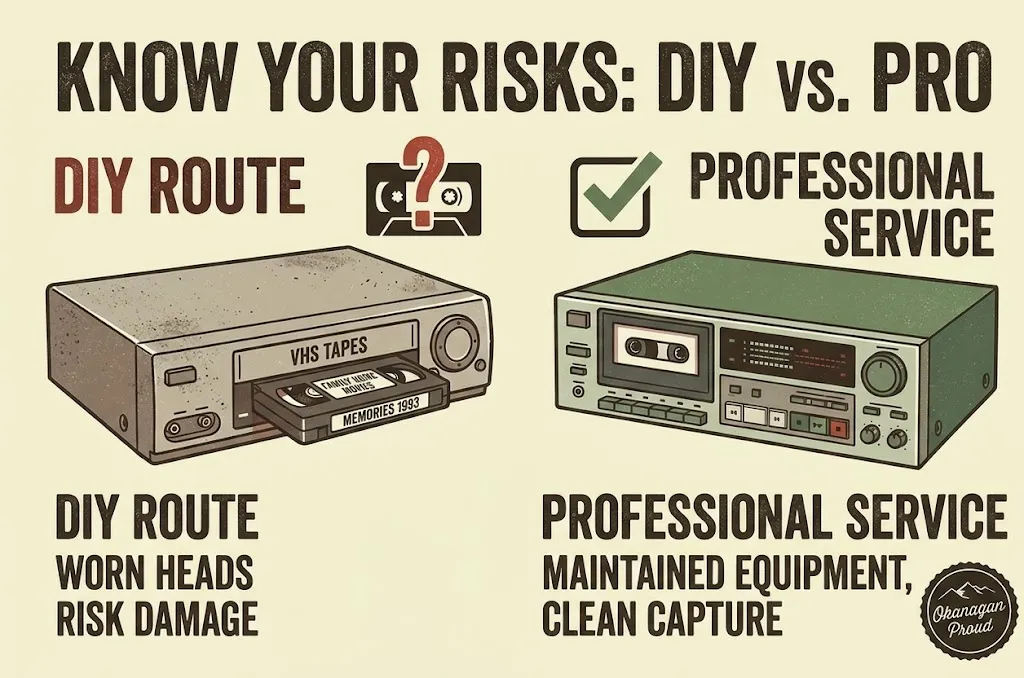
If you own a working VCR and a capture device (a USB video capture card, roughly $30 to $80), you can digitize tapes yourself in real time, meaning a two-hour tape takes about two hours to capture, plus setup, plus editing if you want clean files instead of one raw recording per tape. This works fine for a handful of tapes you're not in a hurry about. It gets genuinely painful past 10 to 15 tapes, and it doesn't solve the bigger problem: most VCRs left in Canadian homes today are decades old, haven't been serviced, and can themselves damage a tape on playback, especially one that's already fragile from age.
When DIY makes sense
A small number of tapes (under 10), a working VCR you trust, and no urgency around tapes that are already showing signs of damage (visible lines, warped colour, tracking issues).
When it's worth paying a professional
Larger collections, tapes already showing damage, formats beyond standard VHS (more on that below), or audio on cassette tapes, or simply not having the hours to sit through hours of real-time capture and editing. A professional service also uses properly maintained playback decks, which matters more than people expect, a worn or dirty VCR head can introduce damage that wasn't there before, especially on a tape that's already 30 years old and fragile.
This is exactly the kind of job we do at Porthos Media, we're based in the Okanagan and work with families and estates across BC digitizing VHS, camcorder tapes, and film. Get a free quote and we'll tell you honestly whether your tapes are worth professional handling or fine for a DIY weekend.
What About Camcorder Tapes, 8mm Film, Hi8, and MiniDV?
VHS is just one format in most people's boxes. If you're also holding onto any of these, the same "digitize what matters" logic applies, but the equipment gets harder to find as formats get older:
- VHS-C (the smaller cassette used in compact home camcorders) needs a VHS-C adapter or a compatible camcorder to play back, standard VCRs won't accept it directly.
- 8mm and Hi8 tapes require an 8mm or Hi8 camcorder or deck to play, and working units are increasingly rare and expensive secondhand.
- MiniDV tapes need a MiniDV camcorder or deck with a FireWire (or USB adapter) connection to a computer, most modern laptops no longer have the ports for this without extra hardware.
- 8mm and Super 8 film (actual film reels, not video cassettes) is a completely different process, covered in our guide to digitizing slides, negatives and old film, it needs a film scanner or telecine setup, not a tape player at all.
If your collection spans more than one of these formats, that's usually the point where a professional service is more practical than sourcing four different pieces of obsolete playback equipment yourself.
Common Questions About Old VHS Tapes
How much does it cost to digitize VHS tapes in Canada?
Professional VHS digitization in Canada typically runs per tape rather than per hour of footage, and pricing varies by provider and volume. Get a free quote from Porthos Media for an exact price on your specific tapes and format mix, most quotes take less than a day to turn around.
Can I digitize VHS tapes myself without special equipment?
You need at minimum a working VCR and a USB video capture device to digitize VHS tapes yourself; without both, you can't do it at home. For other formats (8mm, Hi8, MiniDV, film), you also need the specific matching playback equipment, which is harder to source the older the format gets.
Do VHS tapes lose quality even if they're never played?
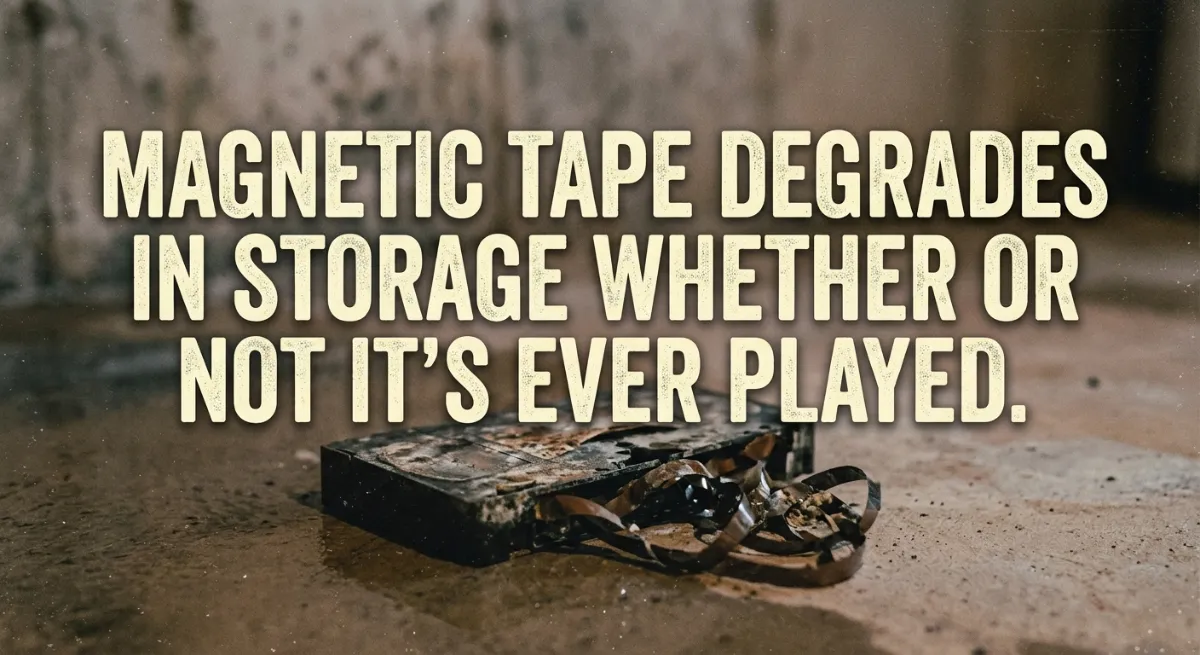
Yes. Magnetic tape degrades in storage whether or not it's ever played, through a natural chemical breakdown in the tape's binder that's accelerated by heat and humidity. A tape sitting untouched in a hot garage can degrade faster than one played occasionally and stored in a cool, dry closet.
What format should I digitize my VHS tapes into?
Most people should digitize into MP4 (H.264) for everyday viewing and sharing, since it plays on virtually any device, and keep the file backed up in at least two places, a hard drive and a cloud backup, not just one. If long-term archival quality matters more than convenience, a higher-bitrate or uncompressed master file can be kept alongside the everyday copy.
Can damaged, moldy, or sticky VHS tapes still be digitized?
Often yes, even tapes with visible mold, a sticky "shed" residue, or storage damage can sometimes be cleaned and recovered by a professional service with the right equipment, though results vary by how far the damage has progressed. This is generally not something to attempt on a home VCR, playing a damaged tape on standard equipment risks losing the footage completely.
Is it legal to digitize a VHS tape of a rented or copyrighted movie?
This isn't legal advice, but generally, digitizing your own home movies and personal recordings for personal backup carries no meaningful legal risk. Commercially copyrighted movies are a greyer area, digitizing a purchased copy for your own personal backup is common and low-risk in practice, but redistributing or selling copies of copyrighted material is not.
Ready to Digitize Your Family's Memories?
If you've read this far, you probably already know which tapes in that box actually matter. Whether it's a handful of home movies or a full estate's worth of VHS, camcorder tapes, and film, Porthos Media digitizes it all, based right here in the Okanagan, working with families and estates across BC. Get a free quote, no pressure, no obligation, just an honest read on what you've got and what it'll take to save it before the tape does the deciding for you.

AROUND THE TABLE
Join the conversation.